Two-and-a-half Million

WikiLeak’s latest scoop, the announced publication of nearly 2.5 Mio emails from Syrian political figures, comes unfortunately too late, I am afraid. The platform again chose to closely collaborate with a number of news outlets, Al Akhbar in Lebanon, Al Masry Al Youm in Egypt, NDR/ARD in Germany, Associated Press in the US, L’Espresso in Italy, Owni in France and Publico.es in Spain. As is mentioned on the WikiLeaks page, the number of emails is more than eight times larger than CableGate, the trove of US diplomatic cables published in late 2010. The amount of information is an unbelievable 100 times larger. “To solve these complexities, WikiLeaks built a general-purpose, multi-language political data-mining system which can handle massive data sets like those represented by the Syria Files,” as the platform promises. It is hoped that this will better facilitate tracing of relevant information in these emails.

While the numerous revealing and/or embarrassing US American diplomatic cables may have sparked the initial uprisings of the Arab Spring in late 2010 and early 2011 , the expected information in the Syria Files may disclose what most of us believe to know already about the Assad regime. But that won’t help the Syrians any more. Anyway Assange seems to be more optimistic:

“The material is embarrassing to Syria, but it is also embarrassing to Syria’s opponents. It helps us not merely to criticise one group or another, but to understand their interests, actions and thoughts. It is only through understanding this conflict that we can hope to resolve it.”

It might be interesting to learn more about Iran’s influence and that of western powers in the violent crushing of the Syrian Spring which has resulted in the killing 10’000 people or more so far .

July 5, 2012 @ 15:49

Last modified July 5, 2012.

Posted in WikiLeaks | Tagged , , | Leave a comment

Extreme Weather

Derecho

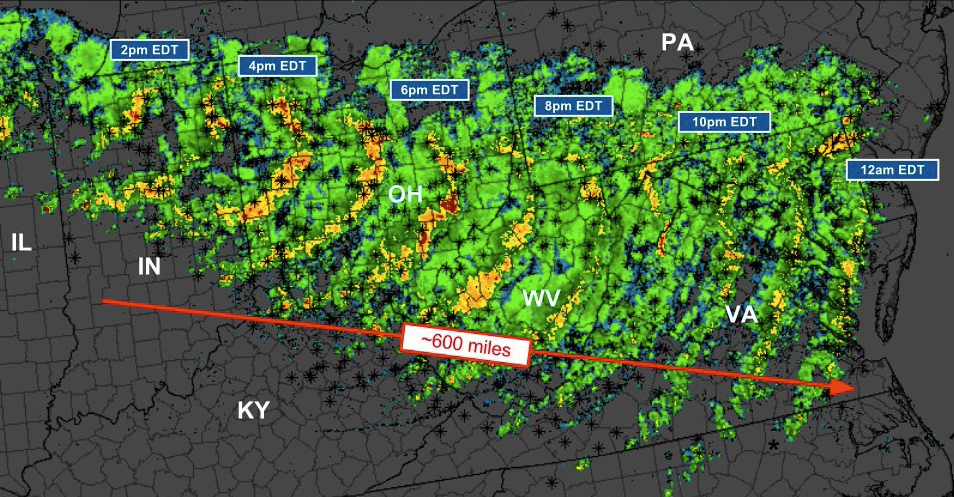
The devastating storm on June 29 leaving millions of Americans without electricity in scorching heat well above 100 degrees Fahrenheit was not a unique event. The massive windstorm with hundreds of thunderstorms accompanied by numerous tornados hit large areas of America’ Midwest up to the East coast, roughly 1000 km. It’s what meterologists call a derecho, the Mexican term for “straight ahead”. The 29 June 2012 derecho has to be considered one of the most destructive in North American history. Before the weather front stroke, temperatures south to it reached record highs of 109 degrees in Nashville, Tennessee, and 104 in Washington D.C., for example. And the extreme weather continues. Many Americans have cancelled today’s Intependence Day celebrations.

Global warming is characterized by greater areas of local weather extremes. This is no dream, this is really happening. NASA provides monthly updates of surface temperature anomalies (see picture below). Two years ago, the devastating heat wave in Russia raised much concerns. Both 2010 and 2011 were among the hottest years on record.

Global warming continues irrespective of wet and cold summers in other parts of the world, for instance in the place I’ve chosen to live.

 MOD_LSTAD_M_2000-03

July 4, 2012 @ 15:07

Last modified July 4, 2012.

Posted in USA | Tagged , , , , , , | Leave a comment

Avicenna’s Systematic Reviews

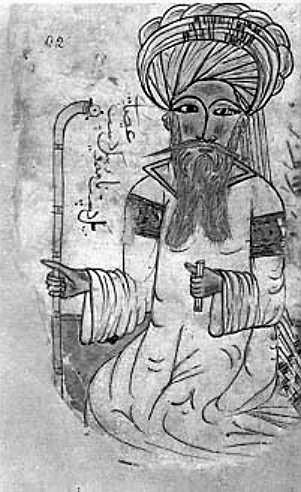
That great medieval polymath and philosopher Ibn Sina (d. 1037), or Avicenna as he is known in the West, might in fact be regarded as father (or inventor) of medical systematic reviews [1], nowadays considered as the highest level of evidence for efficacy of medical treatments, might be new for some, at least for me, before I’d read an interesting 2007 dissertation of, well, a dentist, Jinan Rashid (in German).

Ibn Sina was born around 980 CE in the village Afshana in the vicinity of Bukhara in Transoxiana. He was the son of a respected scholar of the Ismaili sect from Balkh who took care of his overarching education. Although Shi’ite, his father served as high-ranked official in the Sunnite Samanid Emirate. Considered a child prodigy, Ibn Sina had studied the Holy Qur’an and contemporary classical literature before the age of ten years and had started studies in medicine when 16. He was permitted to use Sultan Nuh ibn Mansur’s vast library in Bukhara for completing his medical studies after he had been counseled, albeit to no avail, the seriously ill Sultan at age 17.

Avicenna’s most important work in the medical realm is of course his five volumes of Al-Qanun fi t-tibb which had been completed around 1020 and which had already been translated into Latin in the 2nd half of the 12th century by Gerhard of Cremona (d. 1187). It was also one of the first books which had been printed in original Arabic after Johannes Gutenberg’s (d. 1468) ground-breaking invention of movable print typing. Avicenna’s Canon of Medicine, as it is known in the West, became quickly the standard medical textbook in all European universities until the 16th and 17th centuries [2].

Avicenna’s Qanun mainly collated and elegantly summarized medical knowledge and conceptions of pre-Islamic medicine, i.e. that of Greek Antiquity and late Antiquity. There is hardly any Islamic medicine in it with one notable exception, namely the, as the Prophet Muhammad demanded, frequent use of the miswak, a toothpick made of twigs of the Arabian scrub Salvadora persica, for tooth cleaning. In fact, Avicenna’s views were based on Galen’s (d. ca. 200) humorism about excess or deficiency of the four bodily fluids black and yellow bile, phlegm, and blood,  rather than what has been called the Prophet’s medicine based on traditions according to ahadith.

The Qanun served physicians as leading medical encyclopedia for centuries and, beginning with the 18th century, historic and scientific literature about the Qanun grew exponentially at a rapid pace. The Canon had long been translated into Hebrew, Urdu, and Persian; and in modern times into Russian and Japanese. But it is quite amazing that only parts of the huge work are yet available in English translations. Rashid’s dissertation provides, for the first time, a German translation of certain dentistry-related parts of the Qanun.

That the Qanun contains elaborated paragraphs about dentistry (in particular in volume III, which is dealing with special anatomy and physiology as well as pathology and therapy of diseases of any organ from head to toe, here sections 7 and 8; the latter about oral mucosal and gum diseases was not dealt with in Rashid’s dissertation) might be amazing at first sight; but given Avicenna’s highly systematic and comprehensive approach that should merely be logic and self-evident for the famous polymath. What Avicenna describes, in particular measures for preventing tooth decay, tooth erosion, gum disease, discoloration, or bad breath, sounds both reasonably familiar but sometimes pretty weird, for instance his advice to use a mixture of sugar and honey for polishing teeth before applying, for example essence of roses or other essential oils.

Anyway, did the world-renowned professor and princeps medicorum perhaps practice dentistry himself?

Well, probably not. Rashid’s most revealing part of her interesting dissertation deals with comparative translations of six older than Avicenna’s works [3] in which dental topics had been dealt with, in particular four Arabic authors of the 8th till 10th centuries which have not been quoted by Avicenna [4]. While 75-80% of the texts corresponded with the older works, in many cases literally, Avicenna’s versions seem to be more concise and far more systematical, elegant. For instance, while Hunain provides a similar version of polishing teeth with sugar and honey, he emphasizes mechanical properties; while Avicenna mentions, in addition, different indications according to humorism.

Rashid concludes that Avicenna most likely did not publish his own original work when writing about dental problems. His intention was rather to comprehend contemporary knowledge and put it in order according to philosophical aspects. In a way a systematic review of what was available in the literature which he knew well. The Qanun had been devised as encyclopedia and reference guide, well, without references [5].

Notes

[1] Avicenna discussed in his major medical work, the Qanun fi t-tibb which is the topic of this post, how to effectively test new medicines based on seven conditions for “The recognition of the strengths of medicines through experimentation”:

  1. The drug must be free from any extraneous accidental quality.
  2. It must be used on a simple, not a composite, disease.
  3. The drug must be tested with two contrary types of diseases, because sometimes a drug cures one disease by its essential qualities and another by its accidental ones.
  4. The quality of the drug must correspond to the strength of the disease. For example, there are some drugs whose heat is less than the coldness of certain diseases, so that they would have no effect on them.
  5. The time of action must be observed, so that essence and accident are not confused.
  6. The effect of the drug must be seen to occur constantly or in many cases, for if this did not happen, it was an accidental effect.
  7. The experimentation must be done with the human body, for testing a drug on a lion or a horse might not prove anything about its effect on man. (Emphasis added.)

Thus, several fundamental criteria for clinical trials were met one thousand years before evidence based medicine (EBM) emerged. I find it particularly intriguing that Avicenna considered animal experimentation as no evidence, something which is still not clear to many scholars in clinical medicine.

[2] Yes, I like mentioning Avicenna when entertaining my students about what is considered a scientific impact nowadays. The Qanun truly made an impact!

[3] Hunain ibn Ishaq (9th century), two books by Abu Bakr ar-Razi (turn of 9th to 10th century), al Magusi (about 975), Abu Sahl al-Masihi (d. 1010) who is considered Ibn Sina’s direct teacher, and one pre-Islamic author, Paul of Aegina (7th century).

[4] Avicenna refers, in the Qanun, only once to Galen; in general, in medieval times authors were not mentioned unless they were criticized. Not mentioning sources is nowadays regarded plagiarism.

[5] Ibn Sina died in 1037 in Hamadan, Iran, probably of cancer. He was only 57 years old.

June 30, 2012 @ 17:28

Last modified July 1, 2012.

Posted in Academics, Book Review, Iran, Medicine | Tagged , , , , , , , , , , , , | 1 Comment

Under Scrutiny

Updated below (July 4, 6)

New satellite imagery of a suspect site at Parchin military complex in Iran, 30 km east of Tehran have been published yesterday by David Albright and Robert Avagyan of the Institute for Science and International Security (ISIS). The June 7 picture shows further heavy activity including anew flow of water from the main building and moved soil all of which had been interpreted as cleansing and sanitizing  a site where Iran had allegedly conducted illicit nuclear experiments including high explosive tests, at least a decade ago. While two smaller building close to the main building have been destroyed as was seen on May 25 pictures, nuclear engineer Robert Kelley and former director at the International Atomic Energy Agency (IAEA) has pointed to the fact (on Jeffrey Lewis’ ArmsControlWonk) that the suspect main building itself was still intact. It seems quite reasonable to conclude,

“The Director General of the IAEA is reinforcing claims of the US member of the IAEA Board of Governors that the Parchin site is being sanitized, when it is clear that only one area outside the boundaries of that site may be in the process of being cleared for unknown purposes.  The area next to the test building, where any random uranium contamination might have occurred and is the area that would need sanitizations remains untouched.  The alleged suspicious activity is outside the fence, and in some cases is probably not even occurring.  When trees and features up to 12 years old have not been disturbed it is incredible to say they are being sanitized.

Iran should be asked to explain why they are leveling a field outside the boundaries of a non-nuclear site not subject to IAEA inspections.  They may choose not to answer.  The Director General should be asked to explain why he characterizes minor landscaping activities outside the boundaries of a site that troubles him, as sanitization and worrying.  He too may not choose to answer.”

Comments to his opinion by him, David Albright and others are informative, too.

In prospect of the failed Moscow Talks of E3+3 of June 18 and 19, Gareth Porter of Inter Press Service had suggested that any highly visible activities at a such scrutinized site (which anyway would not remove easily traceable amounts of nuclear material) would make sense for Iran only if it could prove without doubt that nothing illicit has ever been done there if and when IAEA inspectors are eventually allowed to visit the site. “The only thing missing is somebody waving to the satellite,” he quotes nuclear scientist Dr. Behrad Nakhai.

Well, sort of red herring. Porter writes,

“The nature of the changes depicted in the images [of May 8 and 30] and the circumstances surrounding them suggest, however, that Iran made them to gain leverage in its negotiations with the IAEA rather than to hide past nuclear experiments. “

But this has apparently not happened. When IAEA can inspect the site is, after Moscow, unclear.

June 21, 2012 @ 6:57

Update July 4, 2012. ISIS has published the other day new satellite imagery of June 21 indicating what David Albright and Robert Avagyan consider progress of “suspected activity at the Parchin site,” lots of bulldozing, again water flow, etc. The suspect main building seems to be still intact, though. Environmental samples eventually taken by IAEA inspectors would probably not be affected. Even Iranians know that.

Update July 6, 2012. And here Gareth Porter’s new account debunking the whole tale of the Parchin site.

Posted in IAEA, Iran, NPT | Tagged , , , , , , , | Leave a comment

Three Thousand Years

Two years ago, I had written a brief essay on Prophet Muhammad’s (PBUH) mystic Night Journey to Jerusalem and then further into Heaven which is commemorated by many Muslims today, 27 Rajab, al-’Isrā’ wal-Mi‘rāj. According to the Holy Qur’an (Q17:1) and aḥādīth the Prophet was taken to the “furthest mosque”, al-masjid al-aqsa,by al-Buraq, the mythical white-winged mare, and ascended to heaven from the Rock on the Temple Mount. The journey took place about one year before the Prophet’s hijra, 621 CE, and he testified afterwards to the Quraysh of Makkah what he had seen in Jerusalem.  But what had he actually seen?

Fact of the matter is that during a rather short period of time, between 614 and 629, Christian almost three centuries long control over Jerusalem had been adjourned by Persian rule. In 614 Jerusalem had been besieged for 21 days by the army of Shah Khosrau II’s General Sharbaraz and after the city’s surrender most Christian inhabitants were massacred and all churches destroyed. Even the True Cross was taken as a trophy to the Capital Ctesiphon. But Persian reign lasted only until 629 when the Byzantine emperor Heraclius reconquered the city and returned the True Cross to the rebuilt Holy Sepulchre.

What the Prophet of Islam might have seen when for the first and last time in Jerusalem I had mainly derived from Oleg Grabar’s book on early Islamic Jerusalem, The Shape of the Holy (Princeton University Press, Princeton, New Jersey 1996) which provides some computer-generated images of the city around 600 CE, one and a half decade before the Persian conquest. One has to assume that in 621, the year of the mystical Night Journey, the Church of the Holy Sepulchre, the Church of Resurrection, and the Church on Mt. Zion commemorating the Last Supper and the large Church Nea Ekklesia of the Theotokos laid in ruins.

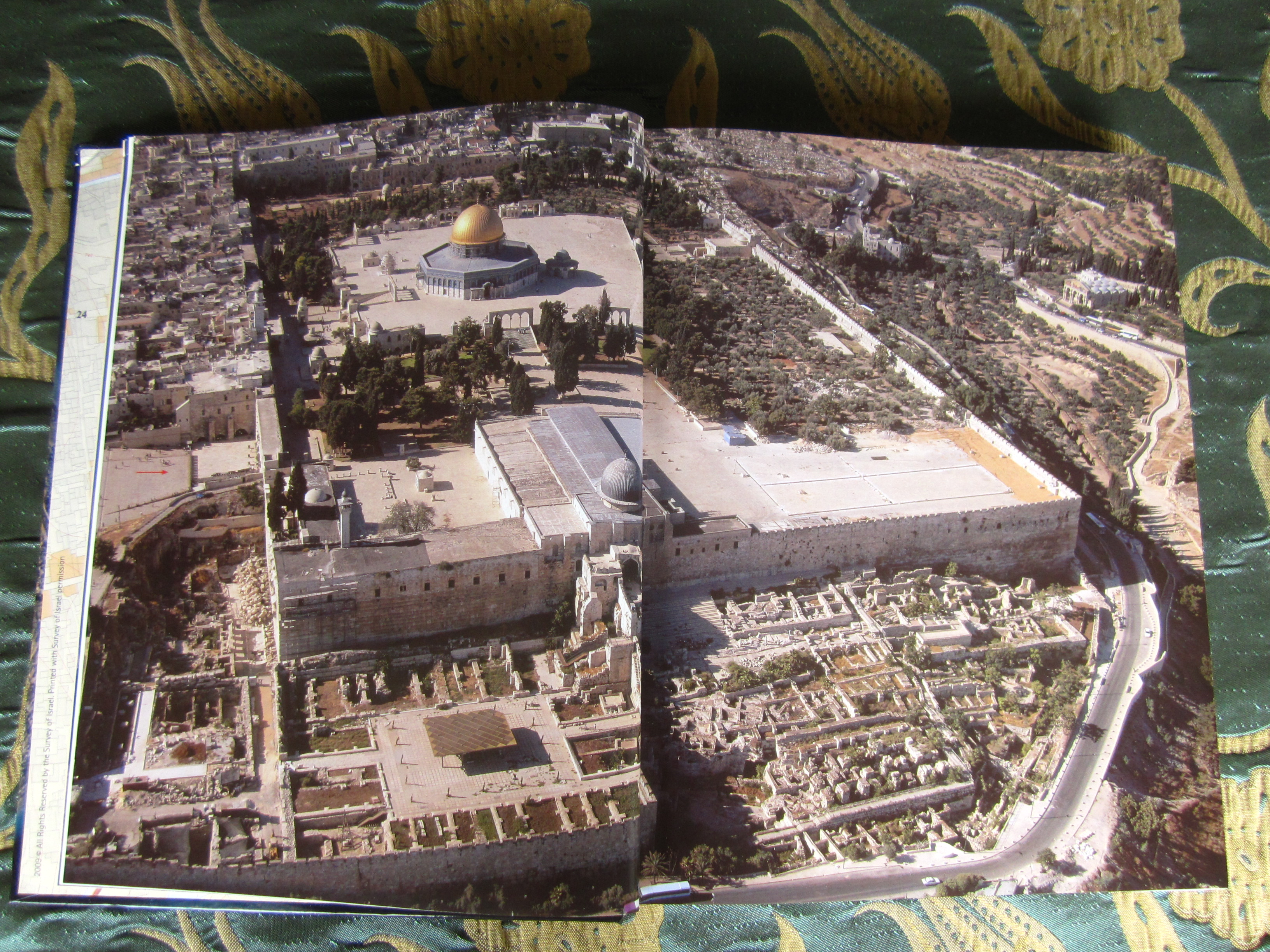
A few decades after the Muslim conquest of Jerusalem in 638 CE, around 700 CE, the Umayyad Caliphs Abd’ al-Malik and his son al-Walid erected, in commemoration of Muhammad’s Night Journey, the Dome of the Rock (from where he ascended to Heaven) and the al-Aqsa Mosque on the Temple Mount, the site of Solomon’s First and post-Babylonian exile Second Temple, and Herod’s reconstruction which had finally been destroyed in 135 CE by the troops of Roman Emperor Hadrian.

Oleg Grabar, who has deceased last year, has co-edited with Benjamin Z. Kedar of The Hebrew University of Jerusalem Where Heaven and Earth Meets: Jerusalem’s Sacred Esplanade (Yad Ben-Zvi Press, Jerusalem and the University of Texas Press, Austin, Texas 2009) which assembles an impressive panel of Christian, Jewish and Muslim scholars who present many unknown facts in three thousand years’ history and stunningly illuminate the unique historical, religious, spiritual, cultural, and political importance of this true interface between, focus of, the three monotheistic, revealed, religions (the not less-charged significance for Christians is derived from Jesus’ relation with and acts in Herod’s Temple). The for Jews significant Western Wall of the Esplanade is not forgotten in the account.

Due to the unsolved political situation of Israel occupying East Jerusalem, al-Haram al-Sharif, the Noble Sanctuary, is seriously endangered. But there is hope. Grabar, in a personal statement, concludes:

“There are legal and technical mechanisms for the preservation of what is deemed beautiful and historically significant, but the implementation of these mechanisms requires decisions about governance and responsibility which cannot be exclusively in the hands of political and religious authorities. Alternate possibilities, through UNESCO for instance, have failed so far. But, if one mediates on the eschatological component of the Haram as the space where Go[o]d will be made prevail and man will be judged, one can perhaps imagine that a space shaped by the Antique world long gone and constantly enhanced by the living culture of Islam could become a place for reconciliation and mutual understanding rather than of strife and contest. Hope springs eternal.” (Emphasis added.)

June 17, 2012 @ 17:20

Last modified June 17, 2012.

Posted in Book Review, Christianity, Islam, Judaism | Tagged , , , , , , , , , , , , | 1 Comment