While Manning has been detained in American military prisons since June 2010 waiting for his court martial trial, Australian citizen Assange, who is the founder of WikiLeaks and it’s public face, is on the run since November 2010 when a European Arrest Warrant was issued in the UK on claims by Swedish prosecution authorities that he had committed certain sexual offenses in Sweden in August 2010. What followed was Assange’s remand, bail and unavailing extradition hearings, and more than 500 days house arrest. He understandably fears that once he arrives in Sweden for interrogation on the allegation (there is no official charge yet) he will immediately be transferred to the United States where a member of Congress has called for Espionage Act prosecution and some others his assassination.
That the Ambassador now was informedthreatened by the British Foreign Office that his Embassy will be stormed by police in order to get hold of Assange is unprecedented at least outside Iran and, well, pretty much concerning. The next hours will tell whether the Ecuadorean President Rafael Correa whom Assange had recently interviewed on in his show on Russia Today will finally buckle, the Embassy will be invaded by police or whatever.
There is no new NIE (National Intelligence Estimate) by US American intelligence agencies on Iran and its nuclear program. What Ehud Barak, Israel’s Defense Minister, once again tries these days to, well, misinform the public about a new situation, looks as usual: outright disingenuous. There is no new urgency as to the “Iranian situation” whatever his US American colleague Leon Panetta had told him in Jerusalem last week. What Reuters quotes from an interview of Barak with Israel Radio sounds rather confused and desperate.
“There probably really is such an American intelligence report – I don’t know if it is an NIE one – making its way around senior offices (in Washington).
“As far as we know it brings the American assessment much closer to ours … it makes the Iranian issue even more urgent and (shows it is) less clear and certain that we will know everything in time about their steady progress toward military nuclear capability.”
According to what US National Director of Intelligence James Clapper said in congressional testimony earlier this year, Iran has not decided yet to build a nuclear weapon, and that had not changed since the notorious NIE of 2007 which made a monkey wrench in the works of Bush and Cheney and likely prevented another war in the Middle East. As Reuters reminds us today, Clapper had concluded then,
“We assess Iran is keeping open the option to develop nuclear weapons, in part by developing various nuclear capabilities that better position it to produce such weapons, should it choose to do so. We do not know, however, if Iran will eventually decide to build nuclear weapons.”
But what does President Obama is not different from Barak’s clamor. Being aware of the above, sanctions which are aimed for completely suffocate a country’s economy such that even reasonable Iranian dissidents in the United States like Muhammad Sahimi fear tens of thousands ordinary Iranians might be killed is no diplomacy.
It is an undeclared war of campaigning Barack Obama which has little to do with Iran’s nuclear program which is by all we know peaceful in nature. Its aim is regime change. And revenge for having humiliated a superpower in 1979.
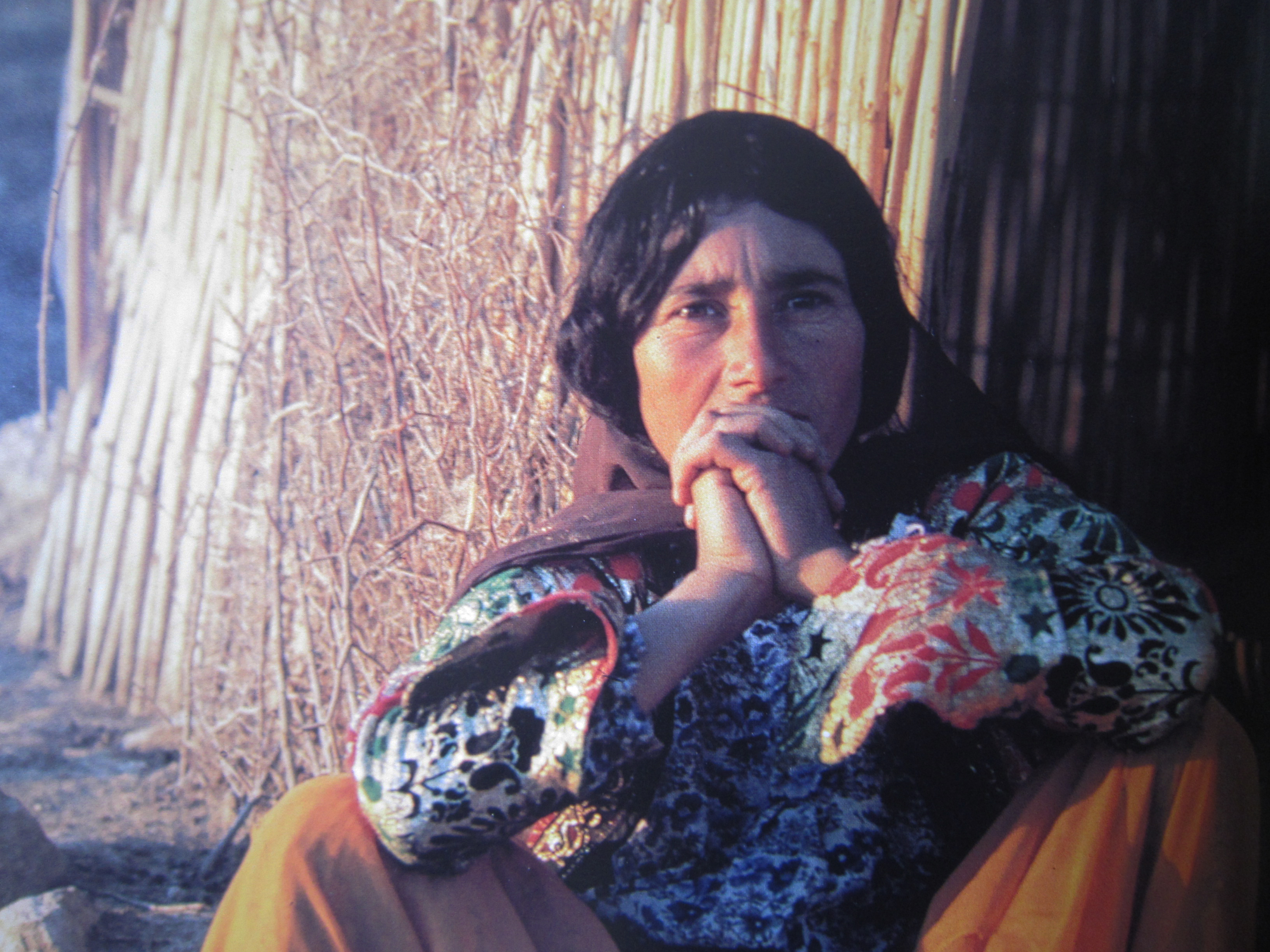
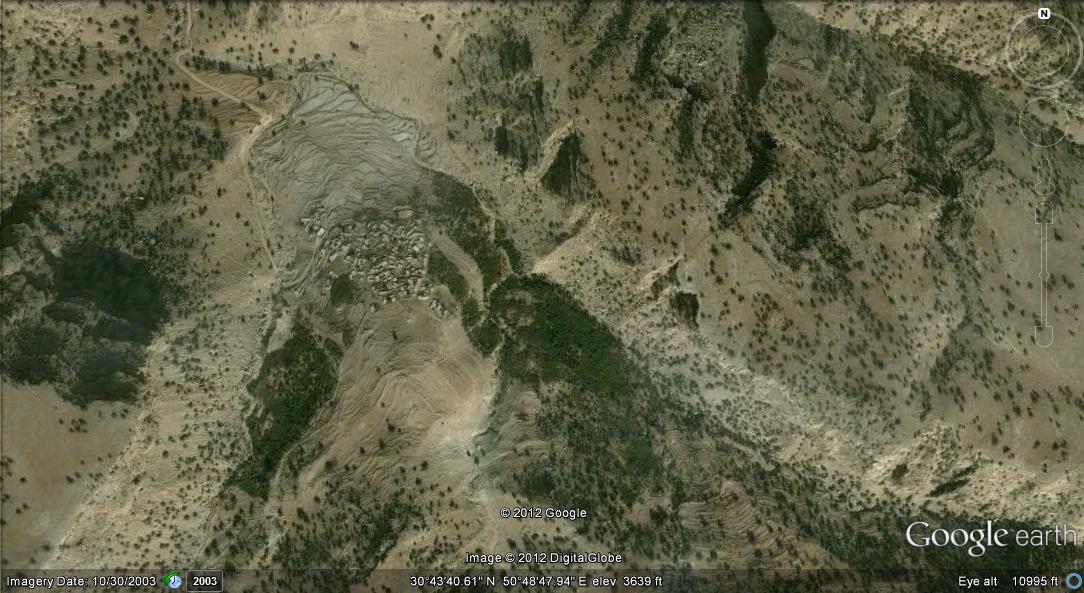
When recently reading with growing interest Patricia Crone’s latest book about The Nativist Prophets of Early Islamic Iran – Rural Revolt and Local Zoroastrianism (Cambridge University Press, Cambridge 2012) I came across a most unlikely reference, Reinhold Loeffler’s interviews of Boyer Ahmadian tribe villagers in the southern Zagros mountains in the early and mid 1970s (Islam in Practice – Religious Beliefs in a Persian Village. State University of New York Press, New York 1988). Crone noted (p. 210) that,
“in a tribal village in the southern Zagros mountains studied in the 1970s there were still people who believed the duration of the world to be 50,000 years; others dismissed this as an erroneous idea of the mullahs (sic), claiming that it was the Day of Judgement that would last 50,000 years, a well-known popular view in Iran. Among the adherents of the erroneous idea of the mullahs was an old trader, who said that there were 50,000 years from Adam to the Day of Judgement, of which 11,380 years had already elapsed; but there had been another kind of men before Adam, and before that as well, for the world had never been empty and never would be; after the day of judgement God would make another creation. The cycles postulated by this man, a devout person who served as the model of orthodoxy in the village, were not limited to seven, and he was not a believer in reincarnation, but apart from that he was unwittingly perpetuating a tradition first attested for the followers of Abdallah b. Muawiya.”
(Abdallah b. Muawiya was a cousin of the fourth Shi’a imam’s son, Zayd ibn Ali, who revolted in Kufa in 739/40 against the Umayyads. Abdallah and the Harbiyya rebelled in western Iran after Zayd had been killed in the battle in Kufa and his son Yahiya was killed in Jawzjan in Khurasan in 743.)
Reinhold Loeffler and his wife Erika Friedl had settled and lived with the people in the remote village altogether for more than seven years. They became friendly with Loeffler and Friedl so that both, besides their fieldwork as anthropologists, were able to record intensive and quite intimate talks with inhabitants of the village. Loeffler’s account comprises altogether 21 interviews about religion (“world views”) with a cross-section of the male villagers with quite different backgrounds, the mullah, teachers, traders, an orthodox, a fundamentalist, a doubtful etc. There is remarkable consonance when it comes to the core (as the villagers understand it) of Islam, demanding strive for pleasing God by working hard, caring for people avoiding day-by-day temptations and sins, emulating Ali, Husayn and the other Imams (not to forget the Prophet). About which sins will be forgiven and when and how. And tiny but interesting differences as regards cosmology, the Day of Judgment, and what happens with the soul during one’s demise and the coming of the former.
After 40 years (and 33 years into the Iranian Islamic Revolution), this world appears to be gone now, although I am not sure as regards the century (millennia?)-old religious beliefs of the common people in Iran’s countryside. When reading Loeffler’s series of interviews a disdain for the mullah in particular and the ulama in general is striking (while the shah’s dictatorial rule over Iran was, in general, regarded benevolent, even agreeable to God). A large number of folk-beliefs which are expressed in the interviews would not really please the Ayatollahs presently ruling Iran. It would be interesting to further assess whether Karl Marx’ statement, “Religion is the sigh of the oppressed creature, the heart of a heartless world, and the soul of soulless conditions. It is the opium of the people” does really apply here. These settled tribesmen still live in accord with nature which might at time be utterly cruel. But nature doesn’t oppress, although it needs to be comprehended and controlled in order to avert harm, illness, or destitution; to meet some of the basic aspirations in life, health, marriage, children and their well-being. Few of these, well, superstitious beliefs expressed here are actually based on orthodox Shi’a Islam as imposed on the Iranians after 1979.
Both Loeffler and Friedl do author each of a chapter about the Boyer Ahmadi (supplemented with a few rare pictures taken in the 1980s by Nasrollah Kasraian) in Richard Tapper’s and Jon Thompson’s The Nomadic Peoples of Iran (Thames & Hudson, London 2002) about which I had written before, see here.
Extreme heat hit the Middle East today, first day of the holy month of Ramadan. With an incredible 126.3 degrees Fahrenheit (52.4 degrees Celsius), Omidiyeh in Khuzestan in Iran was the hottest spot on Earth. With 123.3 F (50.7 C), Abdaly in northern Kuwait, some 150 km to the southwest, was not really cooler today.
I had expressed my serious concerns three years ago about unbearable weather conditions in particular in countries of the Middle East during midsummer Ramadan, when eating and drinking is prohibited from dawn to dusk for the devout Muslim, see here. The old times when any activities at daytime would completely cease during Ramadan are over. These days, the foreign workforce in Arabian countries (Iran is different), in particular construction workers from Bangladesh, Pakistan and India, are supposed to continue toiling outdoors. In many of these countries a law might prevent them from working if temperatures would reach 122 F (50 C), but 118 F (49 C) does not really makes a difference.
Anyway, to all my friends and colleagues over there, have a blessed and most spiritual time. Ramadan Kareem!
Up to the so-called Sunni Revival long after the conquest of much of the Islamic World, and foremost Iran, by the Seljuqs in the first half of the 11th century, the religious denomination of Iranians has never been so clear. After the Arabs under caliph Umar ibn al-Khattab had brought the Sasanian empire and its last shah Yazdegerd III to their knees in the battles at al-Qadisiyyah (near the capital Ctesiphon) in 637 and Nahavand (near Hamadan) in 642, Iran’s state religion, Zoroastrianism, had not just vanished. Albeit victory of Islam was inevitable at first sight. The rapid Arab conquests after their Prophet Muhammad’s sudden demise in 632 took indeed place before the Muslims’ holy book, the Qur’an, had been compiled into an official, standardized, version by Uthman ibn Affan in about 650 (as legend tells). So, the conquests of Palestine and Syria in 634-6, Jerusalem and Ctesiphon in 637, and Egypt in 639 had probably little to do with a compelling new religion. One main factor for the rapid success of the Arab conquest of Iran was, of course, the peripheral location of its capital, Ctesiphon, and its early fall and that simple fact is stressed early in Patricia Crone’s new book [1] on the “nativist prophets” [2] of the first two centuries after the conquest in Greater Iran.
How did the Iranians respond to forcible imposition of yet immature Islamic ideas, which, by definition, blend those of the older religions Judaism and Christianity? Well, they rebelled. But not so fast.
The Revolts
Much commenced with the Persian general Abu Muslim Khorasani (d. 755) and Islam’s third civil war (749/50) when members of the Hashimiyya in Khorasan revolted against the ruling Umayyads [3]. Abu Muslim’s origin, whose original Persian name was Behzadan, remains obscure, though. During the rebellion against the last Umayyad caliph Marwan II, Abu Muslim was sent to Khorasan by the leader of the Abbasid rebellion, Ibrahim bin Muhammad, where he headed the uprising since 747. When Abu-l Abbas as-Saffah was proclaimed first Abbasid caliph in 749, Abu Muslim assumed office as governor in Khorasan where he gained almost legendary status among Muslims (both Shi’tes and Sunnis), Zoroastrians, Jews and Christians alike. Relations with the caliph and his successor deteriorated, though. Abu Muslim was eventually ordered to Madain by caliph al-Mansur when he unavailingly tried to appoint Abu Muslim governor in Egypt and Syria. There he was killed and his mutilated body thrown into the river Tigris in 755.
The Iranian revolts took mainly place before and after this third civil war, when the Abbasid Abu-l Abbas as-Saffah (the “blood shedder”) had eventually defeated the troops of Marwan II on the banks of the Great Zab river in Northern Iraq. Times were troubled indeed. Before and after, Alids had tried to rebel as well. In Kufa, Zayd ibn Ali, son of the fourth Shi’a Imam Ali ibn Husain Zayn al-Abidin, revolted in 739/40 and was killed in a battle with the Umayyad governor there. His son Yahiya ibn Zayn continued his father’s struggle. He went to Khorasan through Mada’in and remained in disguise in Balkh until he was arrested. He was imprisoned for some time until he was able to escape after the death of Umayyad Caliph Hashim ibn Abd al-Malik with many Shi’ites from Khorasan gathering around him. He headed toward Nishapur and engaged there in a battle with its governor, Umar ibn Zurarah al-Qasri, whose army he defeated. In 743 he was wounded in the forehead at Jawzjan and killed at the battle arena at the age of only 18 years while his forces dispersed [4]. Crone mentions sources (p. 104) in her new book as to which Yahiya might have been a descendant of another propagandist in Transoxiana after Abu Muslim’s killing in 755, Ishaq al-Turk. Whether Ishak “had allegedly fled from the Umayyads to Turkish Transoxiana and later adopted Muslimi beliefs by way of camouflage” (taqiyya?) is questionable. Crone writes, “It probably reflects the fact that Yahiya b. Zayd was a hero to many of those who venerated Abu Muslim, for Yahiya was a member of the same holy family that Abu Muslim had worked for, and both had been victimised by the ‘Arabs’ who did not understand what their own prophet had preached,” and “One sub-group of the Ishaqiyya claimed that their imam had fled from the Umayyads and the Abbasids to the land of the Turks, where he was now staying and whence the mahdi would come forth, speaking only Turkish. Their Ishaq sounds like our refugee from Sunbadh’s (see below) army mixed up with Yahiya b. Zayd, the refugee from the Umayyads.” Also Abdallah ibn Mu’awiya, Zayd’s cousin and Yahiya’s uncle, and his followers, the Harbiyya/Janahiyya, rebelled after both had been killed. Ibn Mu’awiya’s revolt was joined by the Zaydiyya and even Kharijites. He was killed on behalf of the Abbasids in 748 just by Abu Muslim, to whom he had fled in hope for cooperation, while imprisoned in Herat.
Abu Muslim’s killing in 755 sparked further revolts. One of the insurgents in the Jibal was his close friend Sunbadh (d. 755), a former member of the Iranian aristocracy and now leader of the Muslimiyya. He rebelled in Rayy in 755 but was defeated after only 70 days. Sunbadh denied Abu Muslim’s death and was inclined to deify his friend. And he must have been the founder of the Khurramites, a sect and political movement which has its roots in proto-socialist Mazdakism, a heresy re-introduced in the early 6th century by a Persian reformer and religious activist, Mazdak. Khurramis were Shi’ites but most of their doctrines were those of the Zoroastrians.
As Crone stresses Khurramism was not an intrinsically subversive or rebellious creed but rather friendly and pacifist. Anyway, in Azerbaijan it was the utterly cruel and bloodthirsty Khurramite leader Babak (d. 838) who rebelled against the Abbasids under caliph al-Ma’mun, and his rebellion lasted for more than 20 years. Al-Mamun’s successor Abu Ishak al-Mut’asim appointed in 835 his general Haydar bin Kavus Afshin to fight Babak and his Khurramites in Azerbaijan. Afshin got hold of him only two years later. Babak was executed under torture in 838.
Further to the East, in Sogdia in Transoxiana, it was another ethnically Persian insurgent who went into hiding a couple of years after Abu Muslim had been killed and started a rebellion (around 768), al-Muqanna (d. 779?). It might even be that he also had been a commander under Abu Muslim. His original name was Hashim al-Hakim, or Ata, but he became famous under the name he gave himself, al-Muqanna, or the veiled one. Al-Muqanna claimed to be a prophet, or even re-incarnation of God, a role which had passed to him via Abu Muslim, Ali and Muhammad. He used magic to impress his followers, the Mubayyida. When besieged in his fortress he committed suicide. He, too, was a member of the Khurramiya. While other Khurramite followers at that time wore red clothes, those of Al-Muqanna wore white in opposition to the black clothes of the Abbasids [5].
Khurramism and Beyond
Albeit an orthodox version of Zoroastrianisms had been re-established as sort of state religion under the Sasanids (224-651 CE), there had never been only Zoroastrians in Iran. As Patricia Crone writes in her preface,
“This is a book about the Iranian response to the Muslim penetration of the Iranian countryside, the revolts that the Muslims triggered there, and the religious communities that these revolts revealed. It is also a book about a complex of religious ideas that, however varied in space and unstable over time, has shown remarkable persistence in Iran over a period of two millennia. The central thesis of the book is that this complex of ideas has been endemic to the mountain population of Iran and has occasionally become epidemic with major consequences for the country, most strikingly in the revolts examined here and in the rise of the Safavids who imposed Shi’ism on Iran.”
While the first part of Crone’s book entertains and summarizes what had been published before, in particular by Elton L. Daniel, the second part deals with specific religions and their heresies and beliefs which met in pre-Islamic and early-Islamic Iran, including and with a focus on Khurramism.
The name of the Khurramis is derived from Persian khurram, “happy, cheerful”. It is a blend with much (albeit utterly heretic) Zoroastrian belief in it. Antinomianism, cosmological principles of light and darkness, repeat reincarnation of any creatures. Cleanliness and purification. Non-violence, except when raising the banner of revolt; including avoidance of killing animals and vegetarian diet, or shockingly (for Muslims) only allowing carrion. Or equally scandalous, sharing of women at least by mutual consent. Drinking wine. In brief, freedom of enjoying all kinds of pleasure as long as nobody was harmed.
For the apparent panpsychism of the Khurramis, i.e. their conviction that everything is alive and endowed with sould, spirit, or mind; and likewise their strong belief in reincarnation biblical-type monotheism was intolerably reductionist. Crone explains (p. 273ff),
“From the Khurrami point of view the Christians were better than the Jews and Muslims in that they accepted the idea of God incarnating himself in human beings and also spoke much about the holy spirit. The Gnostics were even better, and best of all were the Platonists, whether pagan, Gnostic, Christian, or Muslim. It is not for nothing than Platonism became an integral part of Iranian Islam.”
The other major characteristic of Khurramism is alienation, in particular political which started with their unhappy encounters with Muslim society when Iran was colonized, postrevolutionary violence, ruined lives.
“Everybody else had followed imams of error; only they (the Khurramis) knew that the guardianship of the Prophet’s message had passed to Abu Muslim or Khidash (a Hashimite missionary in Khurasan, who had been repudiated for having adopted the Khurramite heresy already in 737), who had been betrayed and killed by the powers that be. The Muslimiyya would curse the killers and weep over their martyrs, clearly identifying their dire fate with their own. Eventually they enrolled the Persian kings as imams, and so implicitly as martyrs too. The followers of Abdallah b. Mu’awiya were also defined by loyalty to a martyred hero. So too, of course, were many Shi’ites who were not Khurramis and who wept over al-Husayn. In all cases the evil powers were humans, usually the caliph and his supporters, the ‘Arabs’ who called themselves Muslims, and no attempt seems to have been made to retell the story of the evil powers on a cosmic scale, as an account of the creation. In line with this, what the devotees of martyred heroes dreamed about was not escape from the world, but rather vengeance: the hero would come back, or a descendant of his would do so, and he would kill the oppressors, purify the world, and restore the oppressed minority to power.”
As Crone notes (p. 275), like Shi’te extremism, Khurramism was meant to insulate people, “building religious walls around their communities when the mountains no longer sufficed.” The Muslim conquistadors reduced the countryside to urban subservience and imposed their single transcendent God which was intolerable for the mountaineers. Crone (p. 276),
“They opted out in the name of the nearest they could find to their own religion in Islam, meaning Shi’ism stretched to the limits to accomodate their views. They did so as Khurramis, as Qarmatis and other kinds of Ismailis, above all the Nizaris, and eventually as members of all the quasi-Islamic communities that appeared in regions from the Jibal to Anatolia after the Mongol invasions. But it was not until the Safavid conquest of Iran that the mountaineers got their revenge, with consequences that are still with us.”
In her preface, Crone recommends readers to start with chapter 1 which introduces the actors and sets the scene for Khurranism which it dealt with extensively in chapter 2. It’s a good one. As usual, her new text is heavy stuff, not easy to digest. Crone’s dense writing is demanding, and quoting so numerous hardly accessible Arabic, Persian, Pahlavi, Greek, Syriac, Buddhist, Manichaean primary sources, including Middle Iranian texts recovered from Central Asia and Central Asian archaeology is stunning and highly admirable. In chapter 3, Crone tries to systematically examine specific marital patterns and reproductive strategies discernible behind Muslim accusations of ‘wife-sharing’. While in the eastern part of Iran fraternal polyandry was indeed widely practiced, in the west it was temporary co-marriage, something which is custom even in present-day Iran (nikah al-mut’ah). Anyway, when and wherever Muslims invaded the former Sasanian empire they brought with them a new marital regime and denounced alternative customes as barbarian and incest, a form of, well, pre-modern Orientalism. What closingly follows is a description of the role of sharing wifes and property in the formation of an ancient communist utopian ideal, namely Mazdakism, in Sasanian Iran.
See Patricia Crone’s lecture on The Acculturated Native Who Rebels: Nativists, Nationalists, and Western-Born Jihadists in Historical Perspective of 24 April 2012 at the Institute of Advanced Study at Princeton here or click on the video at the bottom.
Notes
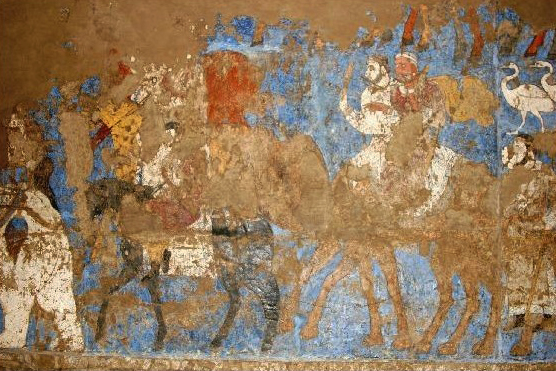
[1] The following is about Patricia Crone’s fascinating account on one of the enigmas of Islam, how and why the century-long civilization of Iranians did surrender to Arabs from the desert and how they “Persianized” the new creed which was imposed on them (Crone P. The Nativist Prophets of Early Islamic Iran. Cambridge University Press, Cambridge 2012). The book-jacket displays the mirror image of two men riding a camel of a Sogdian mural painting from the 7th century. Russian archaeologists began excavating the ruins of the hill-fort Afrasiyab, northeast of modern Samarqand, in 1880. A small museum at Afrasiyab exhibits Sogdian artifacts including a series of 7th century colorful mural paintings from the royal palace. According to the legend to the picture on the book-Jacket, a gift-bearing procession is shown. The eyes of the man in white garment had later been scratched, while the other man in brown-red displayes an anxious face.
[2] Who are nativists? The rebellion in response to the Arab conquest were, so we are told by Crone (on p. 160ff), not nationalistic. Despite Sasanid “state religion” Zoroastrianism, the rural population in the Jibal, Azerbaijan, Khurasan, Transoxiana kept alive their own religious beliefs and cults, traditions. Prime loyalties, above family level, did not include the king or his high priests or army commanders, but village, tribal chief, and/or religious community.
“Nativism is a different type of reaction to foreign rule. The word usually stands for opposition to immigration and other formes of xenophobia among members of a a hegemonic society, but it is also used of hostility to hegemonic foreigners in societies that have been subjected to colonial rule, and that is the meaning of relevance here. Nativism in this second sense is attested with great frequency in Asia, Africa, the Americas, and Oceania in the wake of the European expansion, especially in the nineteeth and early twentieth centuries. … “The movements were alway messianic and/or millenarian: the expulsion of the invaders would be followed by paradise on earth, usually inaugurated by a redeemer figure. Because the rebels came from strata that had not enjoyed the supra-local organization that the aristocracy and religious leaders had possessed (if there had been a kingdom in the region) their revolts were often small-scaled uprisings of a local nature. It is on the nativist pattern that the Iranian revolts conform.”
[3] There were earlier, largely unsuccessful, revolts against the Umayyads, well-known those of Husayn ibn Ali in Kerbala in 680 and his grandson Zayd ibn Ali in 739/40 in Kufa, both marking different schisms in Islam, representing the Imami (“Twelver”) Shi’a as regards the former and the Zaidiyyah in case of the latter (there is another major Shi’a branch, Ismailism, after Ismail ibn Jafar, another generation later). The Armenian bishop and historian Sebeos (wr. 661) tells of an even earlier revolt and heavy resistance in the Jibal, former Media, in northwestern Iran, but “thereafter a ghostly silence descends on the Persian plateau” for almost 100 years as Patricia Crone (on p. 6f) describes the fact that, “Like other non-Arabs the Iranians had to enter the Muslim community to acquire visibility,” which takes time.
[4] When I had been invited to join a pilgrimage to Mashhad in Khorasan by Kuwaiti Shi’ites a couple of years ago, we also visited the small village of Miyami on the road to Sarakhs at the border to Turkmenistan with its tiny (almost ruined but now under reconstruction) Emamzadeh Yahiya, built in the 16th century. Imami (“Twelver”) Shi’ites (the branch my Kuwaiti friends belonged to) hold that Yahiya’s father Zayd had apparently accepted not to be the Imam who would succeed his father (in fact, the Imami consider Muhammad al-Baqir, father of celebrated Ja’far as-Sadiq, as fifth Imam); while adherents to the Zaydi branch of Shi’ism (a heresy according to Imami Shi’ites) regard him the righteous fifth Imam. His son Yahiya bin Zayd, though, is believed to have actually been a Zaydi, and he even seemed to have had expressed aspiration for following his father in the Imamate. “It is at this point that the Zaydi sect takes form and its way becomes separate from that of the Shi‘ah Imamiyyah and Ithna Ash‘ari. The followers of the Zaydi sect do not even refer to the infallible Imams,” as can be read at al-islam.org. It was amazing to note the devout visit of the site by these Kuwaiti Twelver Shi’ites.
[5] As Crone explains (p. 22), Mazdakism has its origin in a Zoroastrian heresy which had appeared already in the 3rd century CE, founded by a certain Zardusht, son of Khrosak or Khurrak, a Zoroastrian heresiarch, a contemporary of Mani (d. 277).
“He proposed to remove strife from this world by eliminating desire, not by training people to suppress it, but rather by enabling all to fulfill it in equal: the remedy was equal access to the main sources of conflict, namely women and property, coupled with abstention from harm to any living being. Women and property were to be shared; war was evil; and animals were not to be killed for food. His ideal relating to women were taken up by the emperor Kavadh in the first part of his reign (488-96). Kavadh was expelled, returned, and displayed no signs of heresy thereafter. When he died in 531 a Zoroastrian priest by the name of Mazdak also tried to implement Zardusht’s ideas, this time those relating to the sharing of women and property alike, as the leader of a major revolt in Iraq and western Iran (c. 531-40). It is thanks to his revolt that the heresy came to be known as Mazdakism.”
This is a personal weblog. The information in this weblog is provided "as is" with no warranties, and confers no rights. The opinions expressed here represent my own and not those of my employer.
I am not responsible for the content of external internet sites.



 Freelance
You must be logged in to post a comment.